| 中文版 |  |
 |
|
|
|
| Introduction of the Hospital |
|
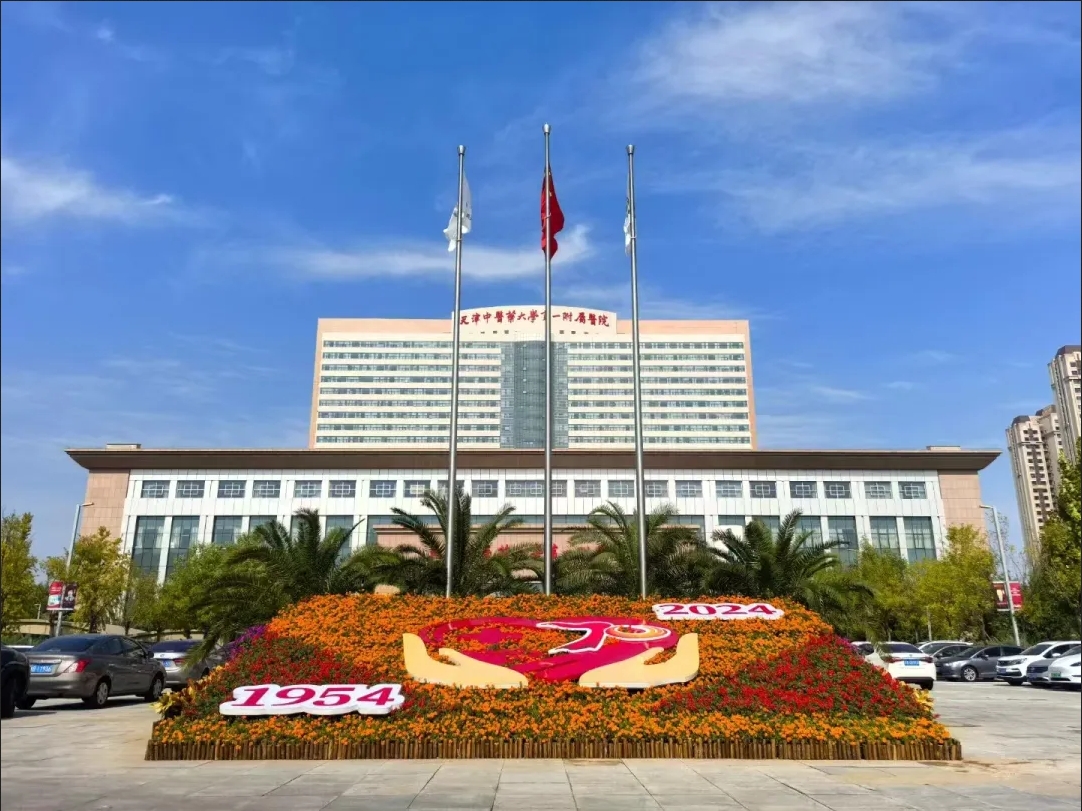
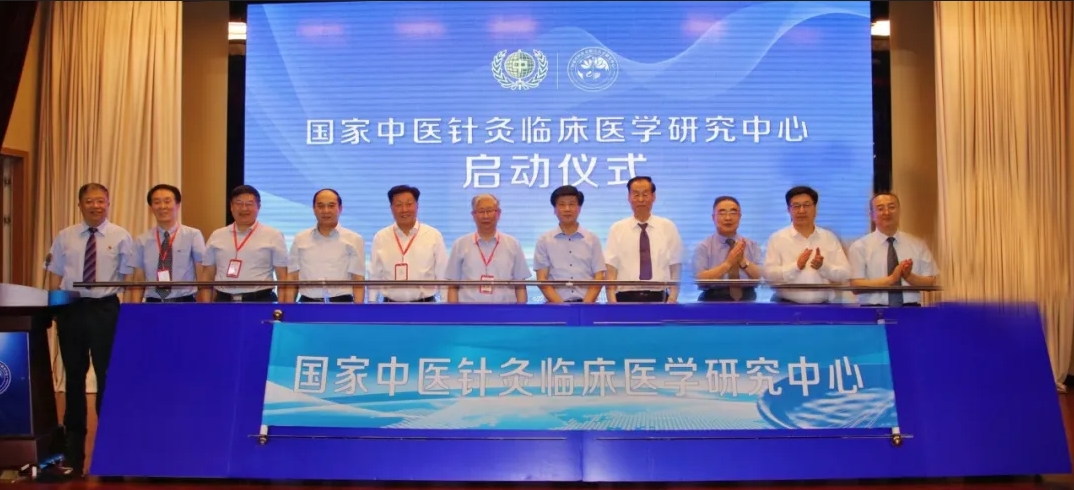
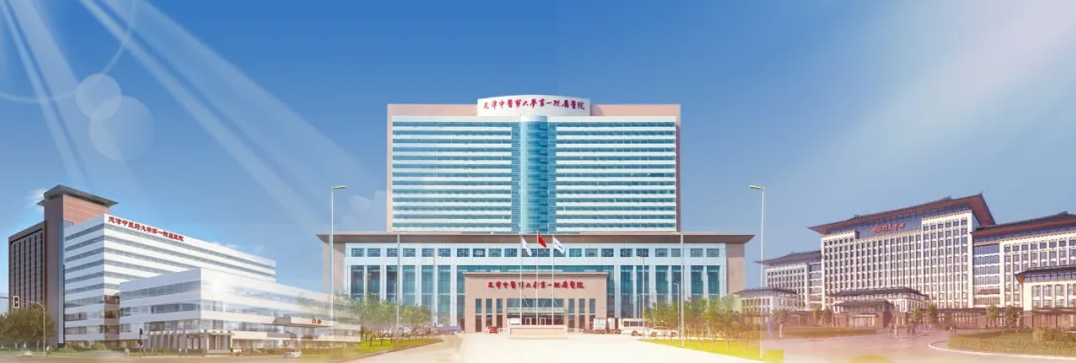
The First Teaching Hospital of Tianjin University of Traditional Chinese Medicine was established in 1954. It is the earliest and largest traditional Chinese medicine (TCM) institution in Tianjin. It also serves as the construction unit of the National Medical Center, the National Clinical Research Center for Chinese Medicine, the Output Hospital for National Regional Medical Center Development, the Key TCM Hospital of the National TCM Inheritance and Innovation Project, the National TCM Service Export Base, and the National TCM Clinical Research Base. In addition, the hospital is the National Regional TCM (Specialty) Medical Center, the National TCM Dominant Specialty Development Unit, the National Demonstration Center for TCM Clinical Teaching and Training, among the first batch of National Standardized Training Bases for TCM Resident Doctors and General Doctors, the National Comprehensive Training Base for High-Level TCM Talents, and the National TCM Base for Epidemic Prevention and Treatment and Emergency Medical Rescue, as well as the National Base for TCM Culture Promotion and Education. It is among the first batch of the Class A Hospitals in China, a National Top 100 Hospital, a National Model Hospital for Public Trust, and the Tianjin TCM Medical Center. The hospital consists of three campuses, namely the Nankai Campus, the Xiqing Campus, and the Jinghai Campus. The total area of the hospital is 537.37 mu (approximately 358,247 square meters). The hospital has 53 clinical, medical technology, and science and technology industry platforms. It has a total of 3,100 licensed beds, with an annual outpatient and emergency volume of over 3.5 million visits and an annual number of discharged patients of over 90,000. The hospital has more than 3,200 employees, including two Academicians of the Chinese Academy of Engineering, three National Masters of TCM, five National Famous TCM Doctors, five Qi-Huang Scholars (experts in TCM), five Young Qi-Huang Scholars, 20 Experts with Special Allowances from the State Council, eight National Outstanding Young/Middle-aged Experts, 37 Instructors for Academic Experience Inheritance of National Senior TCM Experts, 30 National Clinical Talents of TCM, five Experts Awarded by the Tianjin Municipal People’s Government, and 33 Famous TCM Doctors of Tianjin. Besides, there are two innovation teams of the Ministry of Education, and one National Inheritance and Innovation Team of TCM. There are 60 doctoral supervisors and 230 master’s supervisors. With the development of the National Medical Center as its core and the integrated advancement of medical care, education, science and technology, and talents as its fundamental mechanism, the hospital coordinates the dual-center framework comprising the National Medical Center and the National Regional Medical Center. Centering on the key tasks of the Ten Major Functional Orientations, it is building an international acupuncture and moxibustion center that represents the highest standards, striving to forge a national pillar in the healthcare sector. The hospital stays committed to putting people’s health first and pays attention to the health management of the whole life cycle. Besides, the hospital adheres to the integration of prevention, medical treatment and rehabilitation, and attaches equal importance to TCM and Western Medicine. The hospital is committed to the Five-Specialty Approach (specialties, specialized diseases, experts, specialty medicines and professional skills), highlighting the characteristics of TCM. Additionally, the hospital has carried out extensive diagnosis and treatment with TCM characteristics, and has improved the diagnosis and treatment ability of the integration of TCM and Western Medicine. The hospital has formed a number of unique diagnosis and treatment programs by combining TCM with Western Medicine for difficult diseases, such as strokes and their complications and coronary heart diseases, giving full play to the unique role of TCM in the prevention and treatment of common diseases, frequently-occurring diseases and chronic diseases. The hospital strives for top disciplines and specialties, and forms a discipline cluster led by acupuncture and moxibustion. The hospital has two national key disciplines, four national key clinical specialties, three high-level key disciplines of TCM of the National Administration of Traditional Chinese Medicine, six regional medical centers of TCM (specialties) of the National Administration of Traditional Chinese Medicine, 10 key disciplines of the National Administration of Traditional Chinese Medicine, 15 dominant specialties of TCM of the National Administration of Traditional Chinese Medicine, and 13 key specialties of the National Administration of Traditional Chinese Medicine. The hospital has established a postdoctoral scientific research workstation in TCM as a first-level discipline doctoral degree authorization unit approved by the State Council. It possesses one national teaching team and serves as a key professional base for national standardized training of resident doctors in TCM and TCM general practice, one of the first batch of national practical skills assessment bases for standardized training of TCM doctors, and the leading unit for the development of national training bases for supervision and law enforcement of TCM. The hospital is home to several national-level scientific and technological platforms, including the National Clinical Research Center for Chinese Medicine, the National TCM Clinical Research Base, and the National Institute for Drug Clinical Trial. It also has 18 provincial and ministerial-level scientific and technological platforms, such as the Key Research Office of Acupuncture Therapy for Encephalopathy of the National Administration of Traditional Chinese Medicine. In the past five years, it has undertaken more than 80 national-level projects, including the National Science and Technology Major Projects, and projects funded by the National Natural Science Foundation of China. The hospital has won more than 60 scientific and technological awards at the provincial/ministerial level or from academic societies. The hospital has established cooperative relations with more than 40 countries, including the United States, Russia, Germany, the United Arab Emirates, and Malaysia. It has also held 17 consecutive international academic symposiums on acupuncture-moxibustion and Tuina. Furthermore, the hospital has hosted the first China-ASEAN International Forum on Traditional Medicine and has established three overseas centers and one Qi-Huang Institute (A TCM integrative medicine public health platform spanning research, education, clinical care, and industry). The hospital stays committed to the guidance of Xi Jinping Thought on Socialism with Chinese Characteristics for a New Era, the hospital’s motto of “Benevolence in Heart, Virtue in Deed”, and the purpose of “Developing TCM, Serving the Society, Maintaining Health and Benefiting Mankind”. The hospital practices the hospital spirit of “Life Supreme and Medical Excellence, Truth-seeking and Responsible Action, Integrity Adherence and Innovative Openness, Persistent Achievement and the Pursuit of Excellence”. The hospital aims to build a leading university hospital in China and a world-renowned National Medical Center that represents the highest level of TCM. Moreover, the hospital is committed to creating a new situation of high-quality development and making new contributions to the development of the Healthy China Initiative and the well-being of human health!
Ancient Charm Meets Modern Style: A New Chapter for Qi Huang
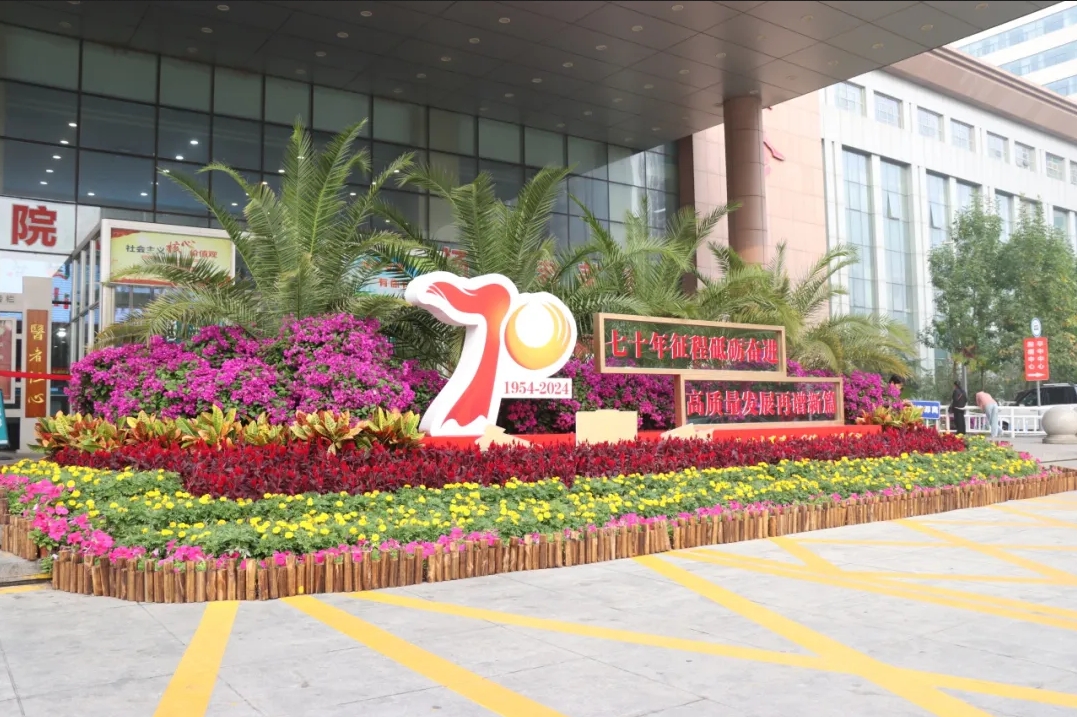
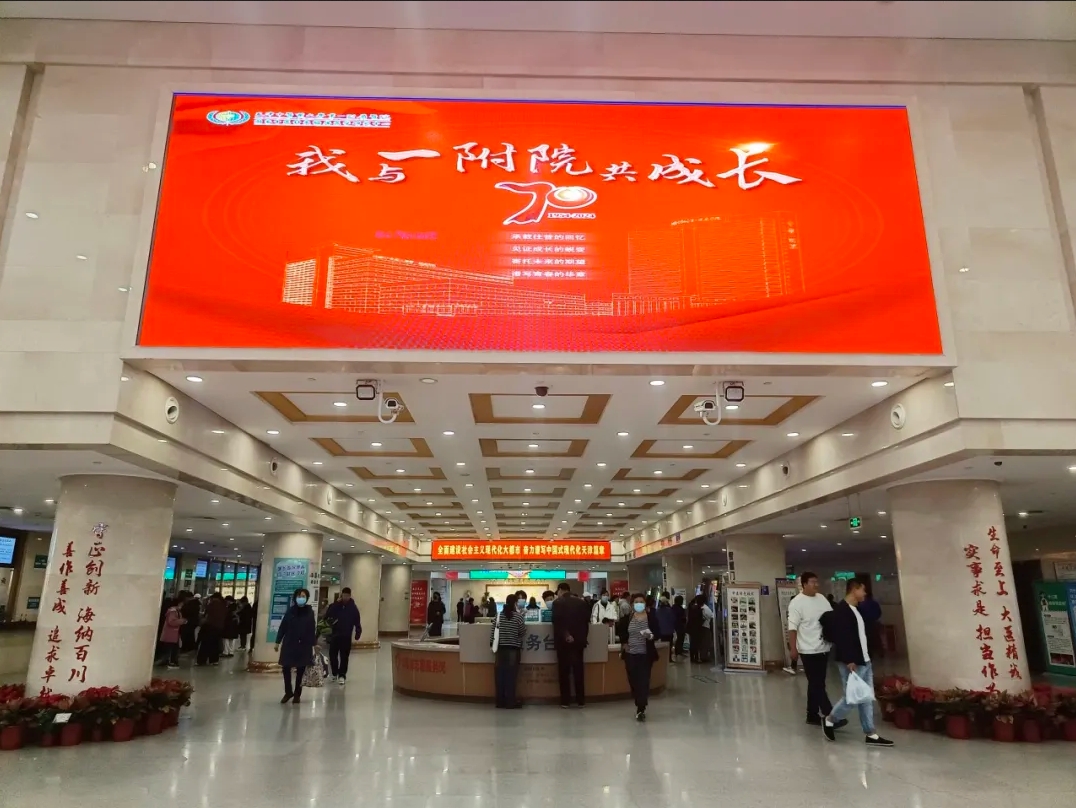
-- A Documentary of the 70-Year Development of the First Teaching Hospital of Tianjin University of Traditional Chinese Medicine In the vast expanse of Chinese civilization, traditional Chinese medicine (TCM) is like an endless river, enduring for thousands of years without decline. With its unique theoretical system, rich diagnostic and treatment experience, and remarkable efficacy, it safeguards the health and well-being of the Chinese nation. Today, on this ancient yet vibrant land by the Bohai Sea, the First Teaching Hospital of Tianjin University of Traditional Chinese Medicine (hereinafter referred to as “the First Teaching Hospital of Tianjin University of TCM”) carries the essence of TCM culture and modern medical wisdom, ushering in the glorious moment of its 70th anniversary. This marks a milestone in the development of TCM in Tianjin, and is a vivid testimony to the vigorous development of TCM culture. Here, it is not only a medical palace, but also a highland for the inheritance and innovation of TCM culture.
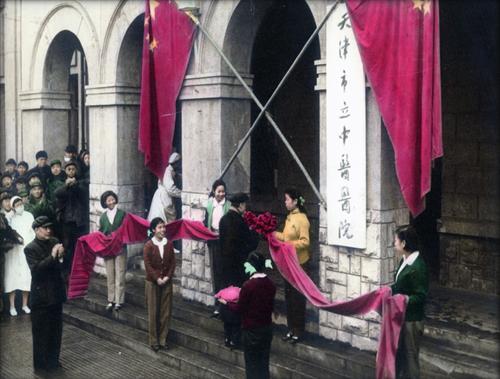
Melodies of Time, Steadfast in Our Journey Looking back, in 1954, the Tianjin Traditional Chinese Medicine Outpatient Department (the predecessor of the hospital) emerged in response to the urgent need to revitalize the cause of traditional Chinese medicine. Like a seed of hope, it took root and sprouted on the land of Tianjin. After 70 years of trials and tribulations, several changes of name, and numerous vicissitudes, the First Teaching Hospital of Tianjin University of Traditional Chinese Medicine has developed into a modern comprehensive traditional Chinese medicine hospital, integrating medical treatment, teaching, scientific research, prevention, health care, and rehabilitation. It has become the “shining pearl” of traditional Chinese medicine in Tianjin. As the “palace” of traditional Chinese medicine in Tianjin and the “cradle” of TCM masters, the hospital not only bears the weight of history but also showcases the infinite possibilities of the future.
Eminent Physicians Gather, Craftsmanship Shines In its early days, a generation of renowned doctors including Lu Guanhu, Ha Litian, Zhao Jifan, Dong Xiaochu, Gu Xiaochi, Wang Wenjin, Shen Jinshan, Hu Xiuzhang, Ye Xixian, Chen Zhipu, Li Shaochuan... With their steadfast efforts, they left their footprints in the hospital’s construction, nurtured successor talents, and laid a solid academic foundation for the development of the First Teaching Hospital of Tianjin University of Traditional Chinese Medicine. Today, the hospital boasts a strong lineup of renowned senior traditional Chinese medicine practitioners, and its academic influence is well-known both domestically and internationally. Over the years, it has established medical and academic cooperation relationships with more than 40 countries including Germany, France, Switzerland, the United States, Russia, Japan, South Korea, Vietnam, Oman, etc., receiving over a thousand overseas patients and thousands of students every year. The distinctive features of traditional Chinese medicine are renowned worldwide.
The late national medical master Ruan Shiyi, who had been engaged in the integration of traditional Chinese and Western medicine for nearly 70 years, creatively proposed the academic thought of “the integration of the heart, spleen, and kidney as a unified entity” and the concept of “strengthening the kidney and spleen, softening hard masses and resolving nodules” for the prevention and treatment of atherosclerosis, and conducted systematic and in-depth research.
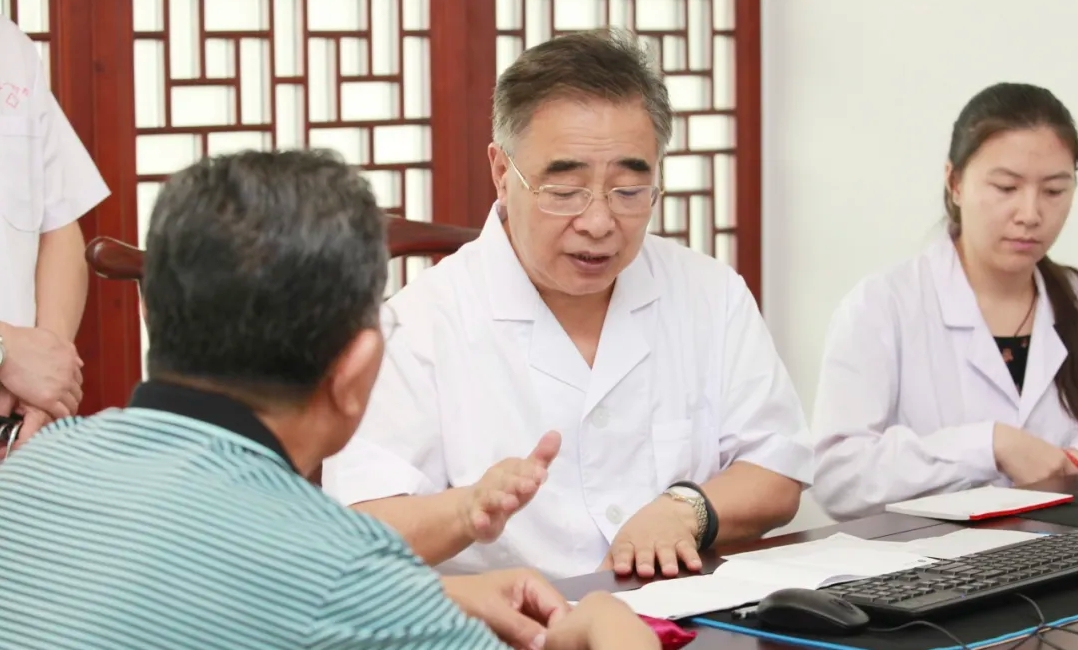
Zhang Boli, the recipient of the “People’s Hero” national honorary title, a TCM master, and an academician of the Chinese Academy of Engineering, has dedicated over 50 years to the cause of traditional Chinese medicine, establishing the theory and treatment system for “dampness-phlegm-fluid diseases”.
The large team of outstanding talents, backed by robust technical strength, leads the high-quality development of the First Teaching Hospital of Tianjin University of Traditional Chinese Medicine, providing strong guarantees for the people to enjoy high-quality medical services. Great Physicians, Sincere and Renowned Across Tianjin Adhering to the values of “medicine as the art of compassion” and “great physicians with utmost sincerity”, the First Teaching Hospital of Tianjin University of Traditional Chinese Medicine upholds the hospital motto of “being kind in heart and being good in action”, striving to build harmonious doctor-patient relationships and wholeheartedly providing high-quality and warm health services to the people.
Cultivate Virtue, Nurture Talent and Harvest Abundance
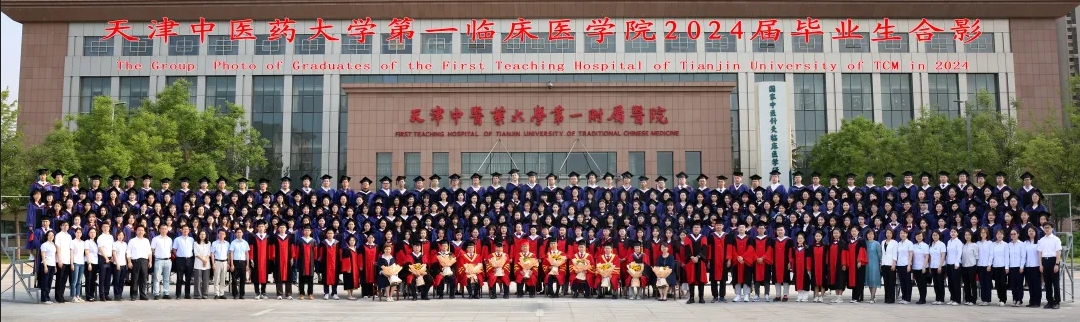
The First Teaching Hospital of Tianjin University of Traditional Chinese Medicine adheres to the educational policies of the Communist Party of China and China, with “cultivating virtue and talents” as its fundamental task. It closely follows the concepts of principle of “teaching and cultivating talents for a century”, while integrating the hospital motto “being kind in heart and being good in action”. Seizing the excellent opportunity presented by the favorable time, place, and people for the revitalization and development of traditional Chinese medicine by the Party and China, it has taken advantage of this momentum and achieved leapfrog development. Embrace Excellence, Innovate and Leap Forward
The hospital is committed to establishing peak disciplines and specialties, forming a discipline cluster led by the acupuncture and moxibustion discipline. It boasts 2 national key disciplines, 4 clinical key specialties, 3 high-level key disciplines of traditional Chinese medicine under the National Administration of Traditional Chinese Medicine, 6 regional traditional Chinese medicine (specialty) diagnosis and treatment centers, 10 key disciplines, 13 advantageous specialties of traditional Chinese medicine, and 13 key specialties. Strive with Vigor, Sail Toward the Vast Beyond
Over the past 70 years, the four career takeoffs achieved by the First Teaching Hospital of Tianjin University of Traditional Chinese Medicine have benefited from the country’s reform and opening-up policies and policies on traditional Chinese medicine, from the correct direction of running the hospital, from the care and support of the Tianjin Municipal Party Committee, the Tianjin Municipal Government, and leaders at all levels, and from the unremitting efforts and dreams of several generations of people in the hospital. |
| Copyright @ 2010 First Teaching Hospital of Tianjin University of Traditional Chinese Medicine. All rights reserved. |